








Facts
-
Historical model
1961 Formula 1 season -
Manufacturer
Ferrari -
Engine
Ferrari 120° V6 -
Power
190 PS at 9,500 rpm -
Gearbox
5-speed + reverse gear -
Grand Prix victories in 1961:
five victories -
Driver World Championship 1961:
Phil Hill -
Achievements
Constructors’ World Championship, 1961
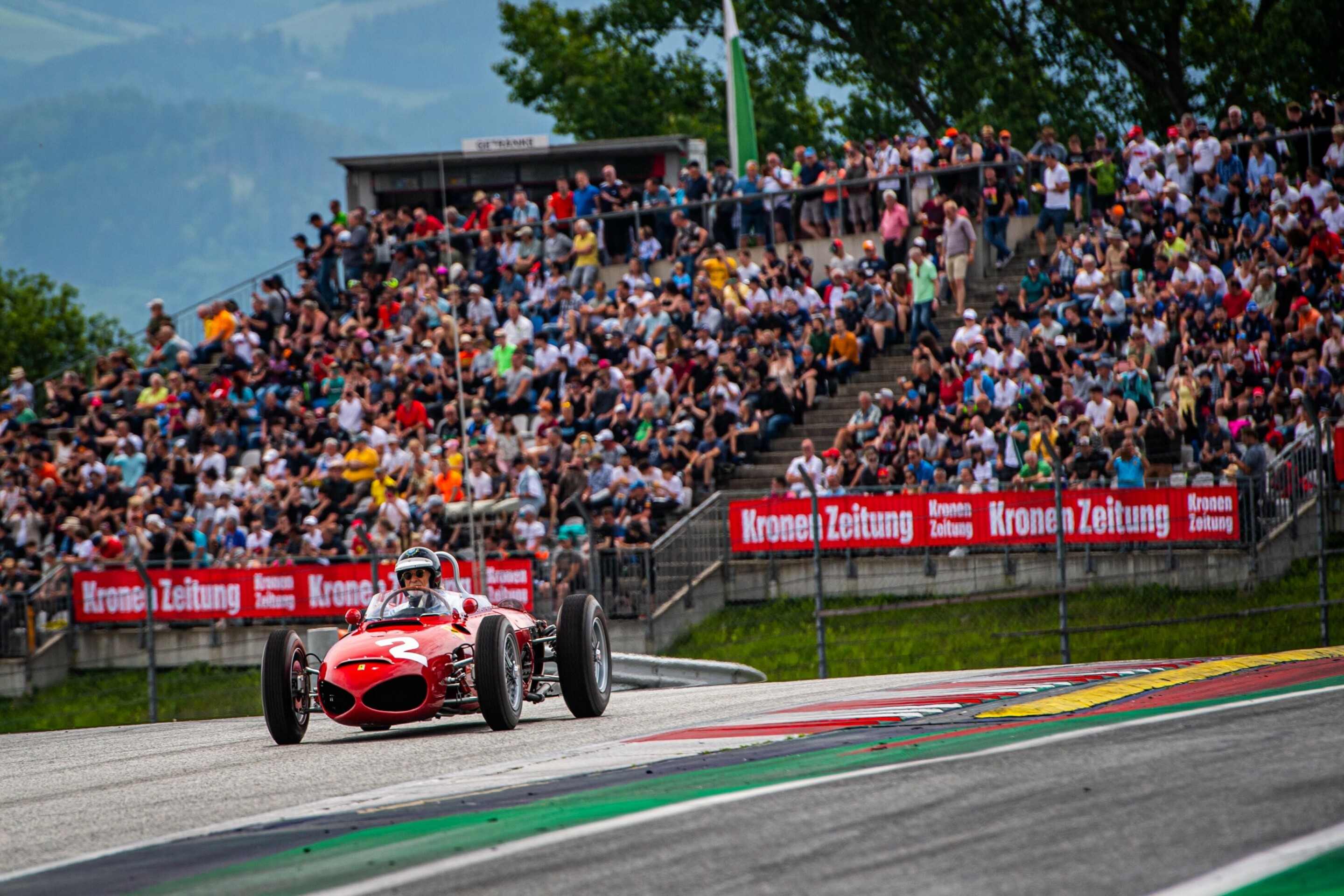
Two air intakes in the nose gave the car its name, while a V6 engine with a capacity of just 1.5 litres made it a world champion. Phil Hill won the Formula 1 World Championship with the Ferrari 156 ‘Sharknose’ in 1961, thereby enabling Ferrari to secure their first ever Constructors’ Championship title.
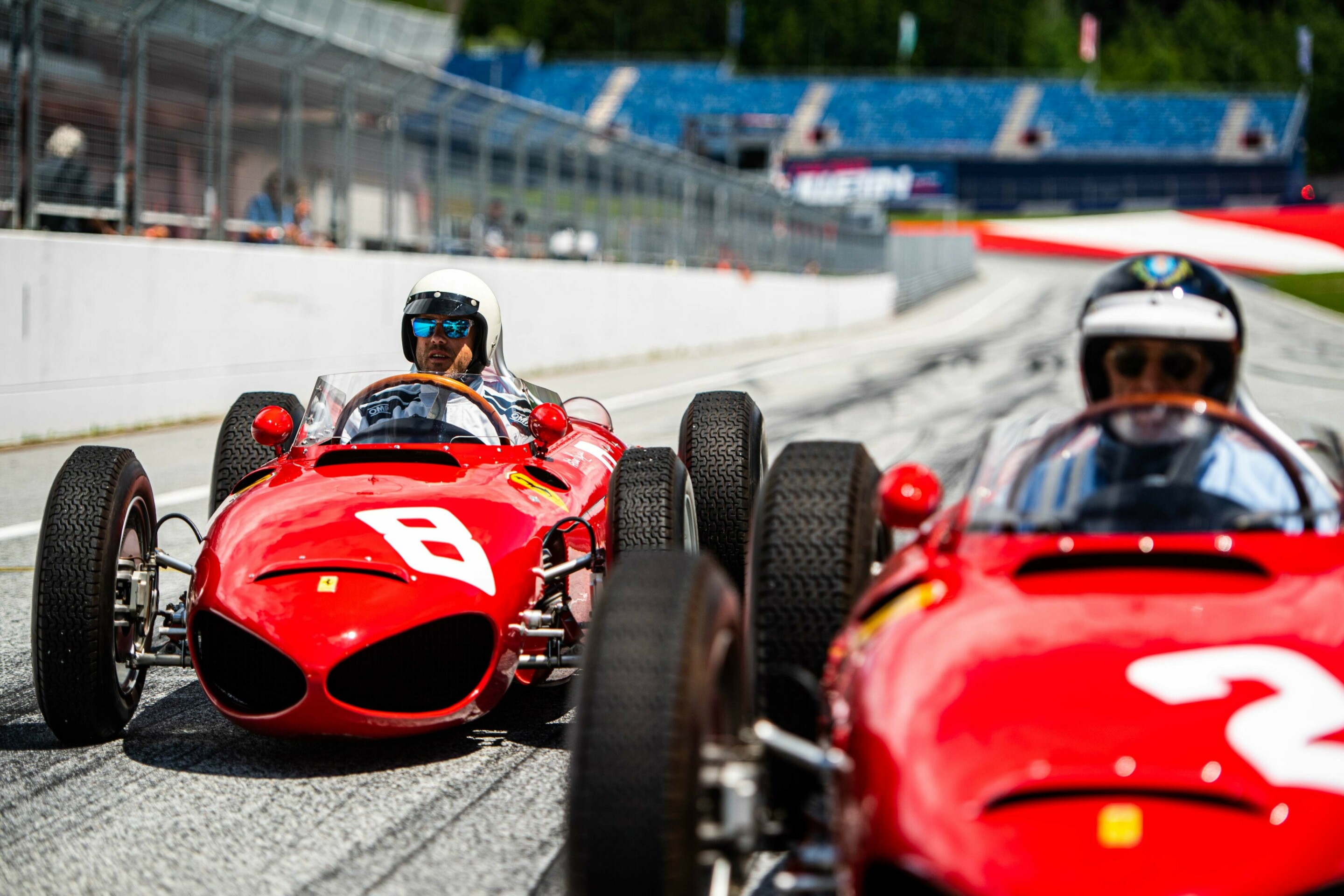
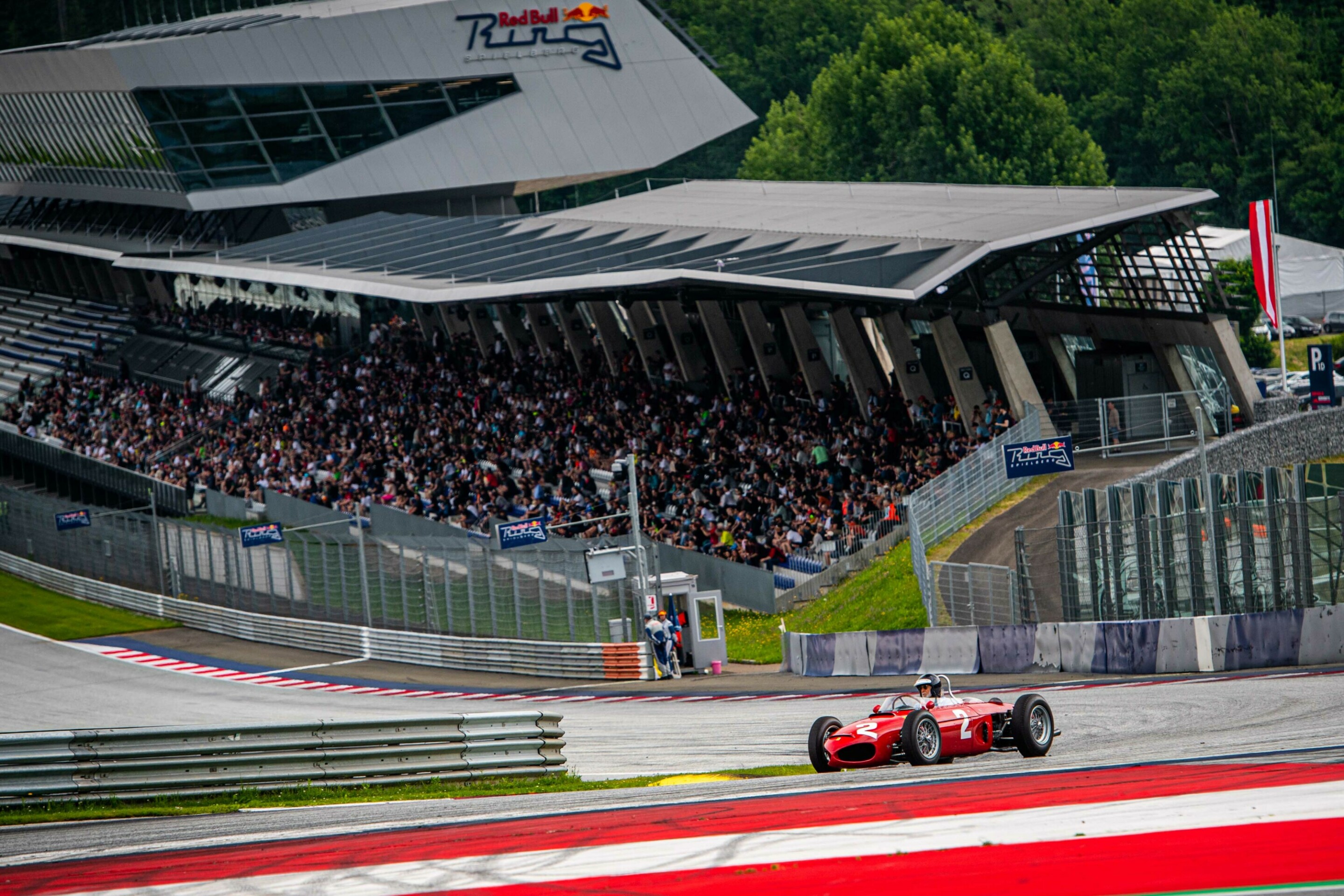
With the Sharknose, the Red Bull Ring Classics sees a return to the 1961 era at the race track. Built according to old Ferrari drawings, this single-seater combines a meticulously detailed construction with original Ferrari racing technology from that time – right down to the V6 engine and gearbox.
The vehicle
The Ferrari 156 was developed in response to the new 1961 Formula One regulations which limited engine capacity to 1.5 litres. Ferrari were able to draw on their Formula 2 experience and make significant further developments to the V6 engine.
In its most powerful version, the cylinder banks were set at an unusually wide angle of 120 degrees. This allowed the engine to be mounted at a flatter angle and the centre of gravity to be lowered. It produced 190 PS at 9,500 rpm from a displacement of just 1,476.6 cm³. But the most striking detail is visible even when the car is stationary: two angled air intakes direct air to the radiator, giving the car its nickname, ‘Sharknose’, which persists to this day.
The driver
In 1961, Phil Hill was a member of a brilliant Ferrari team that included Wolfgang von Trips and Richie Ginther. With victories at Spa and Monza and consistently good results across the board, Hill was in title contention right up until the penultimate round of the campaign.
He won the race at Monza and became the first US-born driver ever to be crowned Formula 1 World Champion. However, his sporting success was overshadowed by a fatal accident involving his team-mate and rival for the title, Wolfgang von Trips.
Hard fact
In what was the most impressive demonstration of the Sharknose’s brilliance during its world championship-winning season, Ferrari took the top four places at the 1961 Belgian Grand Prix with the 156 when Phil Hill won from Wolfgang von Trips, Richie Ginther and Olivier Gendebien.
The story behind the car
The Sharknose that you can now see back on the road today was built many years after the world championship-winning season. Collector and historic racing driver Jason Wright had two cars built to the specifications of the 1961 Italian Grand Prix, based on historic Ferrari documentation.
The project went far beyond appearances. Setford & Company fabricated the chassis and suspension based on historical models, using the same gas welding techniques as in the 1950s and 60s, and even had rivets, bolts and tubes manufactured to the specifications of that time. The aluminium bodywork was hand-crafted using traditional methods, based on original Ferrari drawings.
But what makes the car really special is tucked away inside. Original Ferrari V6 engines and gearboxes from that racing car generation were sourced and fitted to both Sharknose models. And so, using historical materials, original drawings and traditional craftsmanship, a piece of Formula 1 history has been brought back to life and is once again roadworthy.
The legend
- Ferrari abandoned the ‘Sharknose’. The racing cars of that era were dismantled or scrapped once their active careers were over. As a result, no complete original vehicles have survived. However, engines, gearboxes and other components were preserved.
- Legend would have us believe that Sharknoses still lie buried beneath the Ferrari factory. According to stories doing the rounds, scrapped chassis parts were used as concrete reinforcement at the factory site. Apparently, a former Ferrari engineer later told Jason Wright that the story is true, but nothing from Ferrari’s files covering this period has ever surfaced as yet.
- Start number 2 has a special historical significance. The original 120° V6 in today’s reconstruction bears the number 002 – the same number as the chassis with which Phil Hill won at Monza in 1961 and became world champion. However, this detail on its own does not prove that this engine was actually fitted to Hill’s winning car.