

Facts
-
Team
Scuderia Ferrari -
Engine
12-cylinder engine in V configuration (180-degree cylinder bank angle) -
Capacity
2,998 cc, Tipo 015 Ferrari V12 -
Power
500 bhp at 12,200 rpm -
Chassis
Aluminium monocoque -
Weight
600 kg -
Designer
Mauro Forghieri -
Drivers
Niki Lauda, Clay Regazzoni -
In action
From the 1975 South African Grand Prix to the 1976 Long Beach GP -
Starts and wins
15 races, 9 wins -
Historical significance
First F1 title for Ferrari since 1964, first world championship title for Niki Lauda, 5 wins, Drivers’ and Constructors’ titles for Ferrari. -
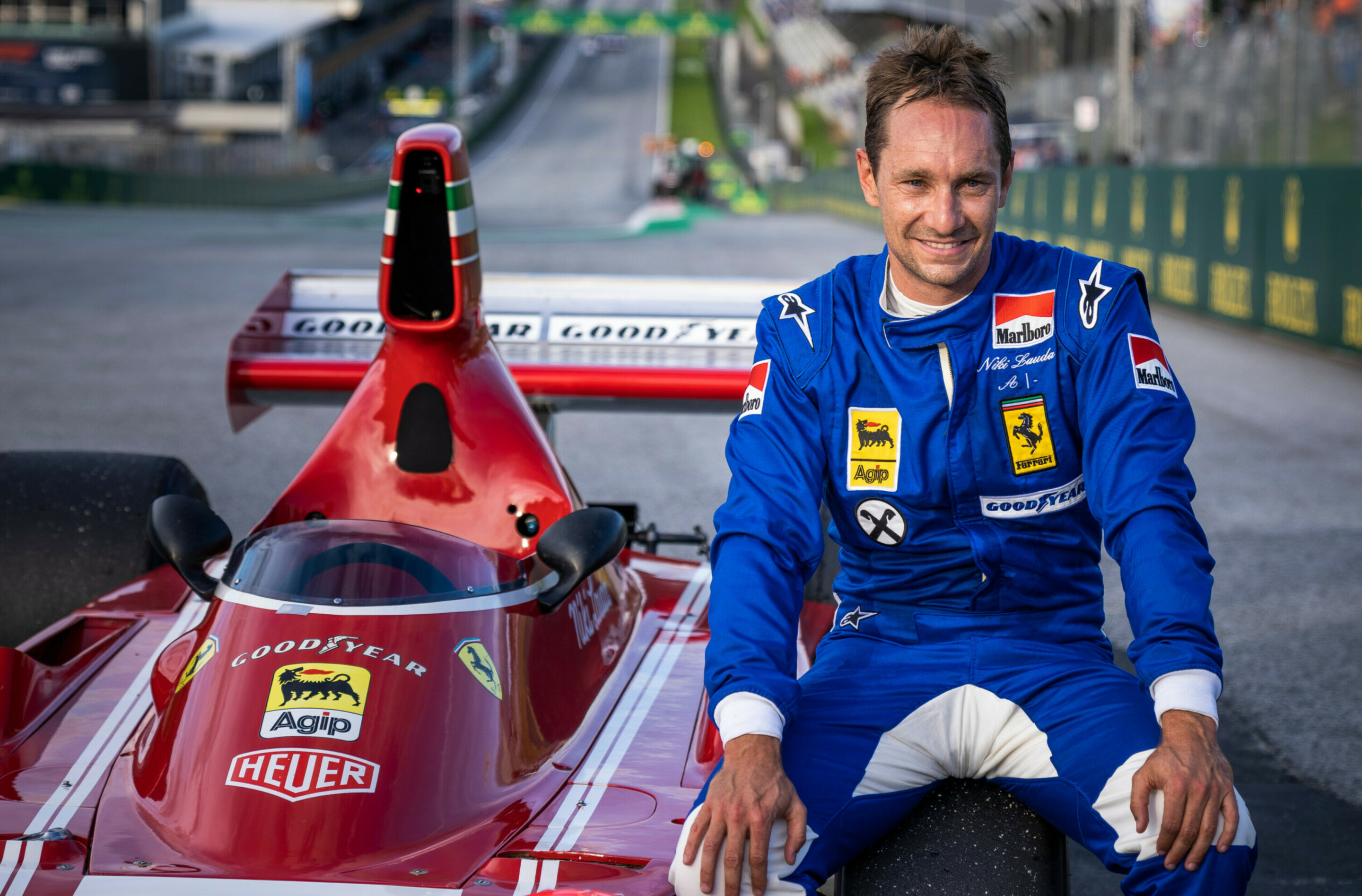
Driver in the Red Bull Legends Parade
Mathias Lauda

The car
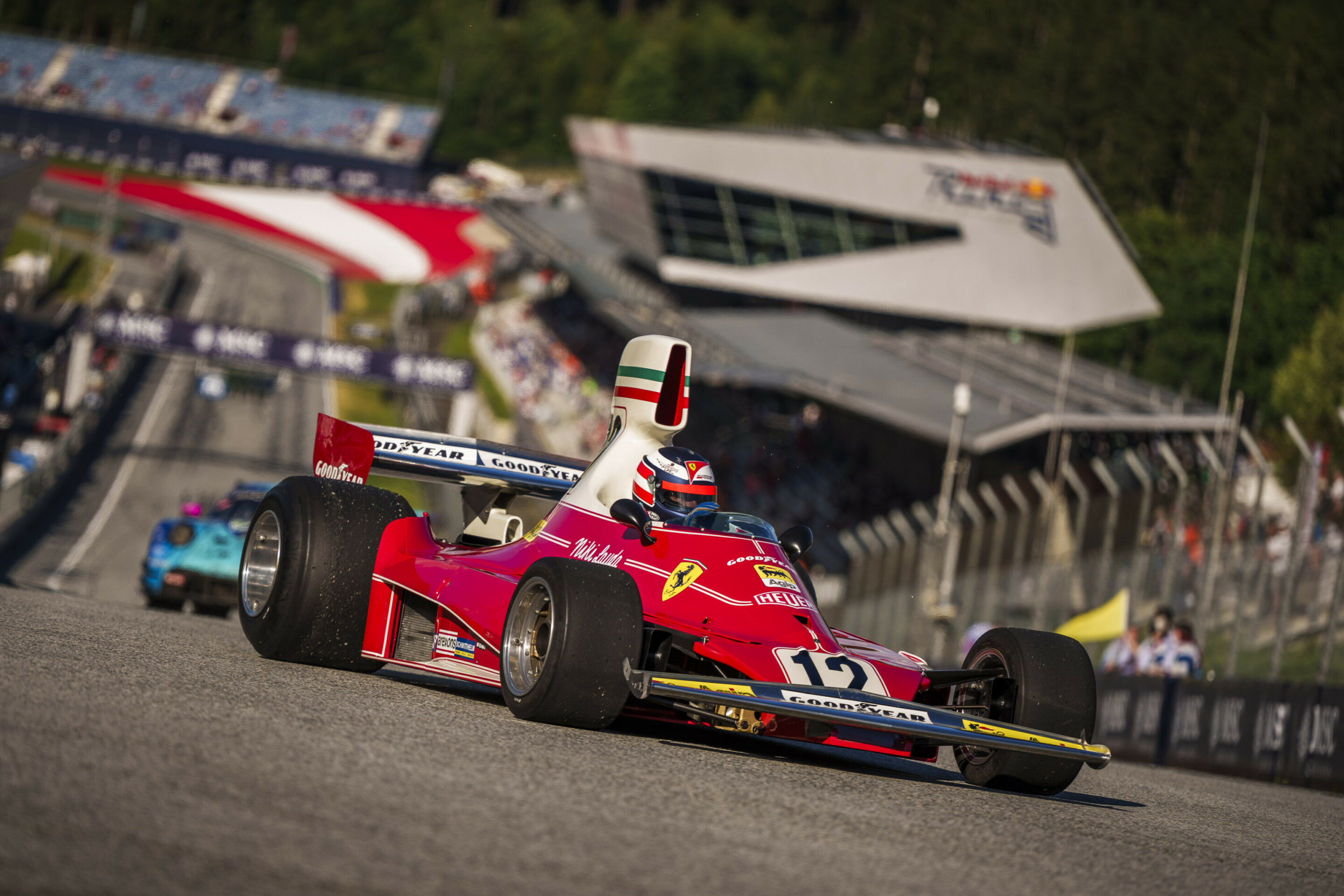
Enzo Ferrari’s perhaps best-known quote was “I make engines, not cars”. Back then, the Ferrari brand defined itself largely through a powerful engine – the twelve-cylinder unit was around 25 bhp more powerful than the competition from Ford that year. This came at a significant cost, namely substantially higher fuel consumption (+25 kilos). By way of compensation, the engine was extremely reliable. Lauda often recounted how it had even survived serious gear-shifting errors – which had sent the revs soaring well beyond the supposed limit of 13,500 rpm – without suffering the slightest damage. The chassis designed by Mauro Forghieri was safer, but also more expensive and heavier. The fact that Ferrari chose this variant nonetheless was one of the reasons why Lauda preferred to drive for the Scuderia rather than opt for the more hazardous designs of other teams.
The drivers
The pair had been a well-functioning partnership since their time together at BRM. The Swiss did not compete in his first car race until the age of 24, securing his maiden victory on the weekend at Monza when Jochen Rindt crashed during practice. Three-time world champion Niki Lauda, after whom the first corner at the Red Bull Ring is named, was at the centre of perhaps the most incredible sporting story of all time. On 1st August 1976, as reigning world champion and championship leader, he suffered a serious crash in a Ferrari 312T2, the successor to the 312T. He survived with severe burns and, after receiving the last rites from a priest, returned to racing just 42 days later at Monza, finishing fourth. The following year he reclaimed his title and went on to become world champion for a third time in 1984. That year he finally celebrated his first home victory at the Österreichring.
Fascinating facts
Following Lauda’s world championship victory with Ferrari, Italy’s top motorsport magazine led with the headline ‘Summa cum Lauda’, a wordplay on the Austrian’s surname and the highest academic honour. ‘Summa cum laude’ has since become a byword for the highly successful technical collaboration between designer and driver, which reached its peak with the 312T. The T suffix stands for ‘trasversale’ (Italian), a reference to the transversely mounted gearbox.
The story
When Austria’s Niki Lauda joined Scuderia Ferrari in 1974, the illustrious racing team was in a parlous state – the idea of withdrawal from Formula 1 was being openly discussed at the company’s headquarters in Maranello. Instead, Enzo Ferrari decided to end the team’s involvement in sports car racing in order to focus fully on the premier class once again. Within months, things were looking up; at the same time, designer Mauro Forghieri was building the new 312T – the car intended to win the 1975 world championship – with significant input from Lauda, whose involvement in the technical development surpassed that of any driver before him. This was followed by Ferrari’s first victory in Monaco in twenty years – complete with a kiss on the hand for Princess Grace, an image that has gone down in history. In the course of 15 Grand Prix races up to the spring of 1976, the Austrian won seven times, becoming the first Ferrari world champion in eleven years. The Tifosi celebrate him as a saviour.
Driver in the Red Bull Legends Parade: Mathias Lauda
Niki’s son loves surfing and motocross, yet despite a late start, he too can look back on a remarkable career as a racing driver: four years in the DTM for Mercedes, and five appearances at the Le Mans 24 Hours for Aston Martin. In Austria, he is also a familiar face as a pundit on ServusTV.